

Preventive Controls Qualified Individuals (PCQIs) are the keystone of the Food Safety Modernization Act's (FSMA) approach to food safety plans. But these members of your team are more than just a checkbox on your compliance task list; they’re also valuable assets who can offer insight into opportunities for improvement and advancement.
But not every business has its own PCQI to lean on — nor is every PCQI up to date on the latest regulatory guidelines. That's why expert partnerships can be so beneficial for taking your food safety operations to the next level.
Learn more about the benefits of PCQI consultation and training through real client stories that act as the proof you need to make your next move.
Why a PCQI Is Essential to Food Safety Operations
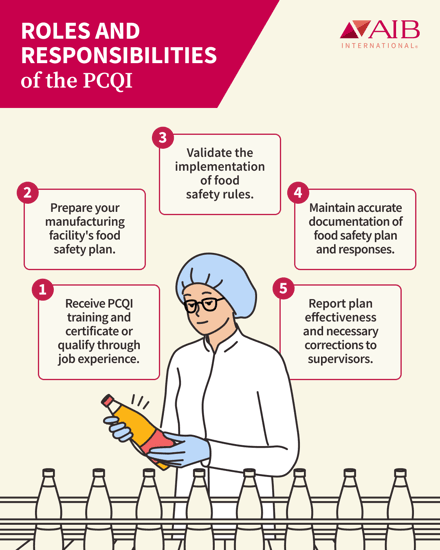
If your business is regulated by FSMA guidelines, a PCQI isn’t just "nice to have" — it's a requirement. These specialized individuals play a key role in the development and implementation of your food safety plan. But beyond meeting regulatory requirements, effective PCQIs offer a few other key benefits through their expertise:
-
Driving proactive food safety: PCQIs use their knowledge to develop and implement effective preventive controls, which allow your team to stay ahead of food safety risks rather than react to them.
-
Preventing costly recalls: With the help of your PCQI's food safety plan, your team can prevent recalls that could lead to financial penalties, regulatory consequences, operational shutdowns, legal fees, and more.
-
Establishing food safety culture: PCQIs act as the bridge between management and frontline employees, ensuring a consistent company-wide food safety culture that drives results and encourages communication.
But with food safety regulations constantly changing and PCQI requirements updating alongside them, what if your PCQI isn’t quite up to date with the latest standards?
The Benefits of Expert-Led PCQI Training
Sometimes your PCQI just needs a little help. After all, they may be familiar with what's required of them, but how confident are they in translating this knowledge into real-world applications? AIB International is a respected partner in PCQI training thanks to our practical approach to learning that goes beyond theory and helps businesses compare their existing food safety systems against FDA expectations.
How AIB International Helps PCQIs Meet Compliance Standards
Maybe your food safety plan isn't compliant with FSMA at all, instead operating only under traditional HACCP principles and Codex guidelines. Many of our clients fall into this category before partnering with AIB International, having yet to align their food safety programs with FSMA requirements.
During their PCQI training, these clients often realize they are missing crucial FSMA-required elements such as expanded hazard analysis considerations and process, allergen, sanitation, and supply chain preventive controls. To help fill these gaps, AIB International's PCQI training includes a few key steps. Students who enroll have the opportunity to:
-
Learn how to conduct a hazard analysis that evaluates all known or reasonably foreseeable hazards in accordance with FDA guidance. This helps facilities identify gaps in their existing plans and apply a more comprehensive risk evaluation process.
-
Clarify how preventive controls differ from traditional HACCP Critical Control Points (CCPs) and how to implement and document process, allergen, sanitation, and supply chain preventive controls based on identified hazards and risk assessment.
-
Gain a structured understanding of why written monitoring procedures, corrective actions, and verification activities are required and how to meet recordkeeping requirements. Training covers how they must function together as an integrated food safety system to demonstrate that all identified hazards are under control.
-
Discover real-world regulatory expectations and examples from industry operations. Using practical knowledge, students can better translate regulatory language into actionable programs within their facilities.
Armed with the knowledge from this PCQI training program, our clients begin recognizing opportunities to strengthen their food safety plans and proactively address gaps before they lead to issues. Not only does this allow facilities to improve their existing food safety programs, but also to move forward with the confidence that these improvements will make a real difference.
Lacking an in-house PCQI altogether and hesitant to bring one on? AIB International’s PCQI consulting services can fill your compliance gaps and provide additional benefits.
How PCQI Consulting Creates Real-World Results
PCQIs are essential to both your compliance and overall food safety success. But what happens when you don't have a trained PCQI on staff? That's where expert PCQI consulting services from third-party partners like AIB International can help drive results.
But what does this look like in real life? Here's how AIB International's PCQI consulting helped a client go from non-compliant to confident.
From Non-Compliant to Confident With the Help of AIB International
A food processing client discovered that although their existing food safety plan aligned with HACCP steps and principles based on Codex Alimentarius Commission guidance, it was not fully compliant with FSMA regulatory requirements — specifically those outlined in 21 CFR part 117.
The client's food safety plan lacked key elements required under the preventive controls rule, including:
-
A fully-documented and comprehensive hazard analysis.
-
Clearly defined preventive controls for all identified reasonably foreseeable significant hazards.
-
Management components such as monitoring, corrective actions, and verification activities.
Third-party audits had observed and noted these gaps — leading to non-compliance ratings and an increased concern about regulatory risk. To resolve these deficiencies, this client reached out to AIB International for technical guidance and PCQI expertise.
Our experts got to work on a collaborative, structured food safety plan transformation that included:
-
Comprehensive hazard analysis review and development to ensure consistency with FDA expectations.
-
Identification and justification of appropriate preventive controls.
-
Development of supporting documentation for monitoring procedures, corrective actions, verification activities, and recordkeeping requirements.
-
Alignment of the program with regulatory requirements and facility operations.
Within three weeks, the facility implemented a fully developed food safety plan that met the missing FSMA requirements with immediate and measurable results:
-
Subsequent third-party audits reported no observations related to the client's food safety plan.
-
No observations related to the food safety plan’s hazard analysis or preventive controls requirements were identified during regulatory inspection.
-
Increased internal confidence that food safety systems met both regulatory expectations and modern preventive food safety standards.
While the compliance benefits of AIB International's PCQI consulting were significant, this client's transformation went beyond just meeting standards. This collaboration improved cross-functional understanding of hazard evaluation, preventive control management, and regulatory expectations, positioning the business to better maintain compliance moving forward and support continued independent growth.
How You Can Leverage a Trusted Partner for Your PCQI Transformation
These stories aren't one-time coincidences. Expert-led PCQI training and consultation services can turn your PCQI into a powerful force for food safety success.
If you're looking for a way to make this change, consider partnering with an AIB International expert through our consulting services or by enrolling your PCQI in our PCQI Online 2.0 training. With these resources, you can secure compliance, improve your food safety culture, and boost your team’s confidence going forward.