
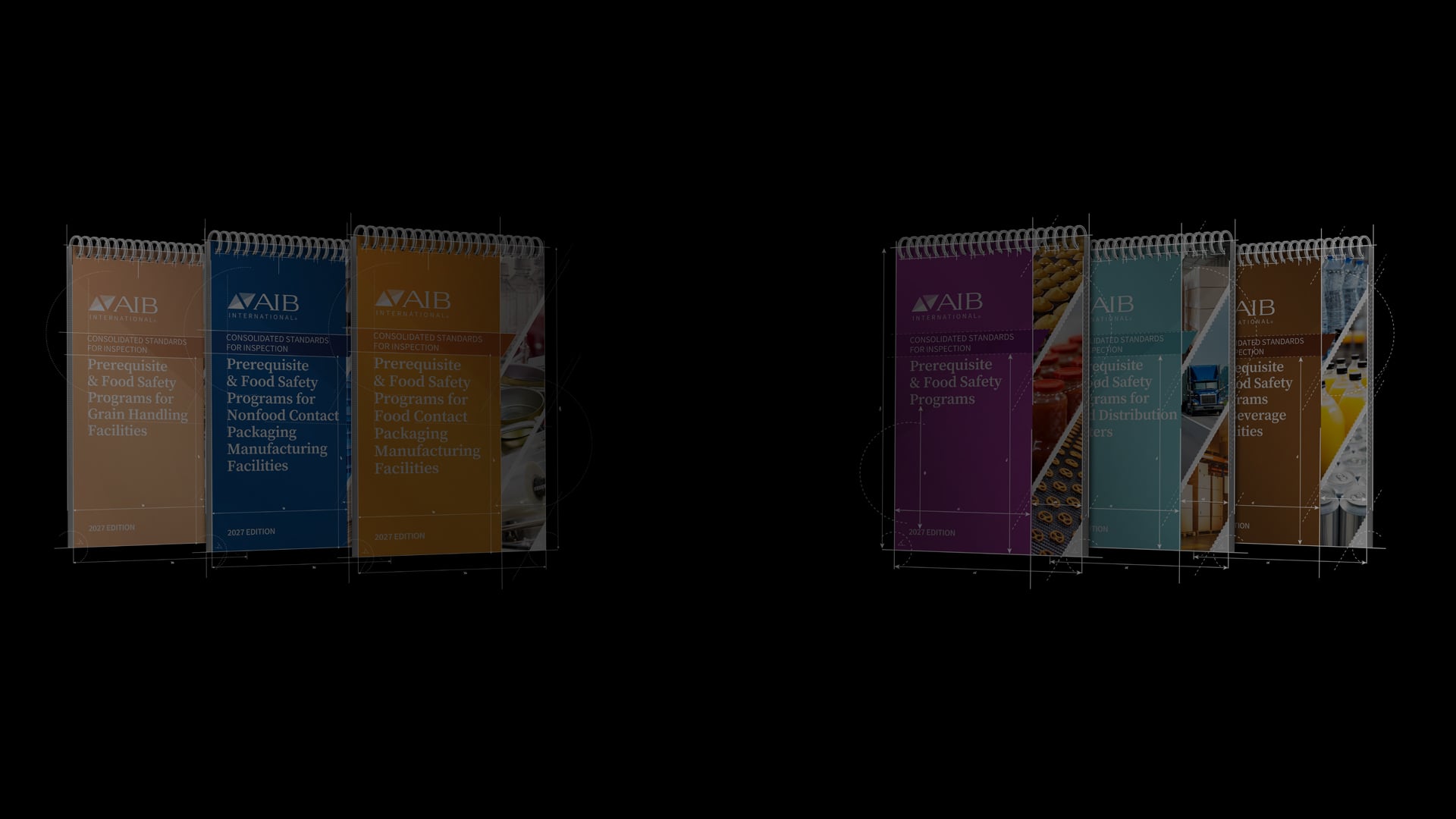
AIB Consolidated Standards 2027: A Guide to Prepare Your Facility for the New Inspection Requirements
In This Guide
- Why This Update Matters
- Your 6-Step Transition Checklist
- Common Mistakes to Avoid During the Transition
- What Food Manufacturers Need to Know (Q&A)
- Your Next Step
If your facility is inspected under the AIB International Consolidated Standards, the new edition will take effect on January 1, 2027. For organizations participating in the AIB GMP inspection program, 2026 is the year to prepare.
This guide explains what is changing, who should be involved, and the six practical steps food manufacturers can take to prepare their facility, update their programs, and transition confidently to the new requirement.
AIB Consolidated Standards at a Glance
| Effective date | January 1st, 2027 |
| Digital release | July 13, 2026 |
| Who is affected | Facilities inspected under the AIB GMP program |
| Transition year | 2026 |
| Recommended Preparation | Review, train, update documentation, conduct internal audits |
Why This Update Matters
A standards update is more than a document revision. It introduces new requirements, revised inspection criteria, and updated technical interpretations that may affect how your facility prepares for and performs during inspections.
Preparing for the new edition requires more than reading the document. A successful transition typically involves three key areas:
- Technical — understanding the new requirements and their intent.
- Documentation — updating procedures, inspection checklists, Food Safety Plans, and other supporting programs.
- Operations — ensuring employees consistently apply the updated requirements during daily activities.
Facilities that begin preparing early have more time to train personnel, update documentation, and verify implementation before inspections begin under the new edition.
Your 6-Step Transition Checklist
1. Download the new standard and review the changes early
The updated AIB International Consolidated Standards will become effective on January 1, 2027. Reviewing the new edition early gives your team time to understand the updated requirements, identify changes that affect your facility, and begin planning implementation.
As you review the new version, compare it against your current programs and identify any areas that may require updates before inspections begin under the new edition.
2. Train the people responsible for implementation
A successful transition requires more than distributing the new standard. Personnel responsible for inspections, food safety, quality, and technical programs should understand both the updated requirements and how they will be evaluated during inspections.
Formal training helps establish a consistent interpretation of the new requirements across your organization and prepares your team to implement them with confidence.
3. Review and update your food safety documentation
Once you've identified the changes, review the documents that support your food safety program to ensure they align with the new requirements.
This may include:
- Internal inspection checklists
- Standard operating procedures (SOPs)
- Audit forms and evaluation criteria
- Food Safety Plans
- Prerequisite programs
- Other supporting documentation
Keeping documentation current helps ensure your written programs accurately reflect your facility's practices and the requirements that will be evaluated during inspections.
4. Conduct internal transition audits
Before your first inspection under the new edition, perform one or more internal audits using the updated requirements. Transition audits help verify implementation, identify gaps, and give employees an opportunity to become familiar with the revised inspection criteria.
Addressing findings before the official inspection allows your organization to make improvements while there is still time to act.
5. Maintain technical competency
Standards updates require ongoing learning. Depending on your responsibilities, this may include refresher training, competency assessments, witness audits, requalification activities, or other documented professional development.
Maintaining technical competency helps ensure the updated requirements are interpreted and applied consistently throughout your organization.
6. Use 2026 as your implementation year
The new edition becomes effective on January 1, 2027, making 2026 the ideal time to prepare. Rather than waiting until the final months of the year, develop an implementation plan that includes reviewing the new requirements, updating documentation, training personnel, and conducting internal transition audits.
Taking a structured approach throughout 2026 allows your organization to complete the transition before inspections begin under the new edition.
Common Mistakes to Avoid During the Transition
Many organizations underestimate the effort required to implement a new edition of the Consolidated Standards. Avoid these common pitfalls to help ensure a smoother transition:
- Waiting until the last few months of 2026 to begin planning and implementation.
- Updating documentation without training employees on the revised requirements and expectations.
- Assuming existing programs already meet the new requirements without conducting a thorough review.
- Limiting the transition to the Quality department instead of involving Operations, Maintenance, Sanitation, and other key functions.
- Skipping internal transition audits before the first inspection under the new edition.
- Failing to communicate changes across the organization, resulting in inconsistent implementation.
Your Questions Answered
Preparing for the new edition often raises practical questions beyond the implementation steps outlined above. Below are answers to some of the questions food manufacturers ask most as they prepare for the transition.
What happens if my facility isn't ready by January 1, 2027?
Beginning January 1, 2027, inspections will be conducted against the new edition of the AIB International Consolidated Standards. Organizations that have not reviewed the updated requirements, trained personnel, or updated their documentation may encounter gaps during their first inspection under the new version. Preparing during 2026 provides time to implement changes before the effective date.
Who should be involved in preparing for the new AIB Consolidated Standards?
Preparing for the new edition should involve more than the Food Safety team. Depending on your facility, this may include Quality Assurance, Food Safety, Operations, Sanitation, Maintenance, Production, Engineering, and personnel responsible for internal inspections or audits. Involving key departments early helps ensure the updated requirements are understood and implemented consistently throughout the facility.
How can AIB International help my organization prepare?
AIB International offers several resources to support organizations during the transition, including Consolidated Standards Awareness Training, technical consulting, on-demand webinars, implementation guidance, FAQs, and other educational resources.
New resources will continue to be released throughout the second half of 2026. We encourage you to visit the 2027 Consolidated Standards Resource Center regularly for the latest updates, tools, and training opportunities
What does good preparation look like beyond training?
Training is only one part of a successful transition. Organizations should also review the updated requirements, update their documentation, communicate changes across affected departments, and conduct internal transition audits before their first inspection under the new edition. These activities help identify implementation gaps while there is still time to address them.
Does the new edition affect only documentation and inspections?
No. While documentation updates and inspection readiness are important, implementing a new edition also requires employees to understand and consistently apply the revised requirements during their daily activities. A successful transition combines updated documentation, technical understanding, and consistent execution across the facility.
When will the new AIB Consolidated Standards be available?
The digital edition of the AIB International Consolidated Standards and the English and Spanish Change Documents will be available in July 2026. Additional language translations will be released in September 2026, and the printed English edition will be available in North America in October 2026.
Where can I find transition resources and updates?
The 2027 Consolidated Standards Resource Center will serve as the central location for transition information, including downloads, Change Documents, webinars, FAQs, implementation guidance, training opportunities, and additional resources. Because new materials will be added throughout the transition period, we recommend checking the Resource Center regularly
Your Next Step
The transition to the 2027 AIB International Consolidated Standards doesn't have to happen all at once. By beginning early, reviewing the updated requirements, training your team, updating your documentation, and conducting internal transition audits, your organization can prepare confidently before the new edition takes effect on January 1, 2027.
As additional guidance becomes available, be sure to visit the 2027 Consolidated Standards Resource Center, where you'll find the latest downloads, Change Documents, webinars, implementation guidance, FAQs, training opportunities, and other resources to support your transition.
If you need additional assistance, AIB International's experts are available to help through Awareness Training, technical consulting, and practical implementation guidance tailored to your facility.